Ionic Fast-Drying Hair Dryer
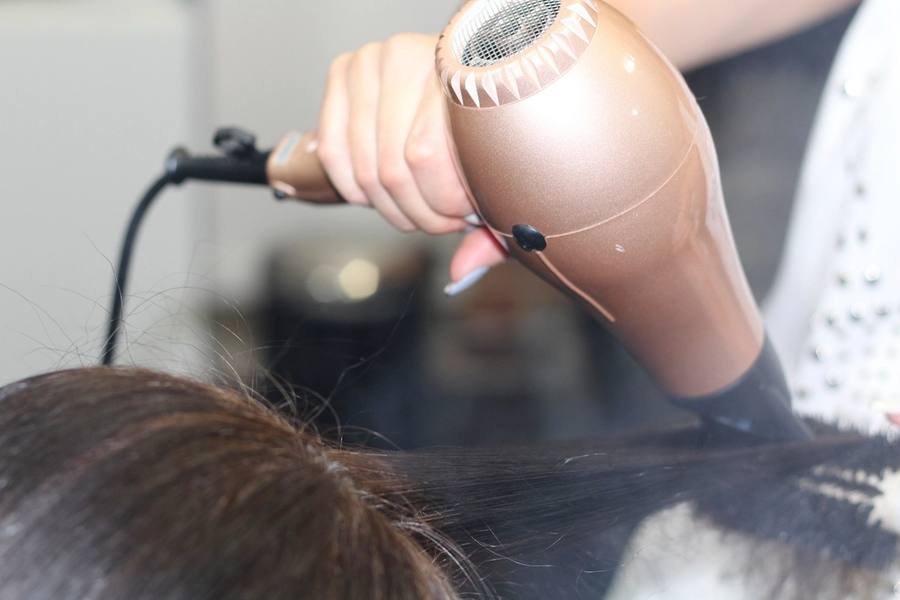
Image illustrative (photo de stock) ; ce n'est pas le produit exact.
Airflow Beats Heat
Hair dries by water evaporating and being carried away, and airflow does both far more safely than high temperature does.
A dryer with strong airflow at moderate heat dries faster and with less damage than a weaker dryer on maximum heat, which is the opposite of how people usually use one.
That is why airflow rather than wattage is the specification worth comparing, and wattage describes power consumed rather than air moved.
Heat Is What Causes Damage
Excessive heat damages the hair cuticle, and repeated high-temperature drying produces the dryness, breakage and frizz people then try to solve with products.
The practical approach is towel-drying thoroughly first, using a heat protectant, and drying on a medium setting with a cool shot to finish.
Holding the dryer close to the scalp on maximum heat is the habit that does most damage, and moving it continuously at a distance is the correction.
Direction also affects the result more than most people realise, because pointing the airflow down the hair shaft from root to tip smooths the cuticle where blasting upwards from underneath lifts and roughens it. That is why a professional blow-dry looks smooth and a hurried home one looks frizzy using the same tool. Adding volume at the roots and then smoothing downwards along the length gets both, and it costs nothing but attention.
What Ionic Technology Does
Ionic dryers emit negatively charged ions, which reduce static and help break up water droplets so they evaporate faster.
The effect on frizz and static is genuine and modest, and it suits thick or frizz-prone hair considerably more than fine hair.
On fine hair the effect can make hair limp and flat, which is why some people find ionic dryers work worse for them, and that is a hair type mismatch rather than a fault.
Attachments Do Real Work
A concentrator narrows the airflow to direct it precisely, which is what makes a smooth blow-dry possible and is essential for styling with a brush.
A diffuser spreads the airflow over a wide area at low velocity, which is what curly hair needs since concentrated air disrupts curl formation.
Using the wrong attachment for your hair type produces poor results regardless of dryer quality, and curly hair dried with a concentrator is the common mismatch.
Noise, Weight And Filters
Powerful dryers are loud, and noise varies considerably between models at similar airflow, which matters for something used near your ears regularly.
Weight matters for anybody drying long hair, since holding a heavy dryer overhead for fifteen minutes is genuinely tiring.
The rear filter clogs with lint and hair, which reduces airflow and makes the motor work harder, and cleaning it monthly is the maintenance that keeps performance and prevents burnout.
Motor type is the specification that separates a dryer lasting a year from one lasting a decade, and it is rarely advertised prominently. Cheaper dryers use brushed AC motors that wear at the brushes and lose power over time, where brushless digital motors last considerably longer, run lighter and allow much higher airflow in a smaller body. That difference explains most of the price gap between otherwise similar-looking dryers.
The Verdict
A well-specified dryer where strong airflow at moderate heat gives fast drying with far less damage than heat alone.
Ionic technology suits thick hair more than fine, attachments must match hair type, and a clogged filter quietly ruins performance.
Clean the rear filter monthly. A clogged filter reduces airflow, makes the motor overheat, and is why dryers die early.
En un coup d'œil
Avantages
- Strong airflow dries faster with less heat damage
- Concentrator and diffuser suit different hair types
- Ionic output reduces frizz and static on thick hair
- Cool shot setting helps set a style without heat
Inconvénients
- Ionic output can leave fine hair flat
- Powerful dryers are loud
- Heavy models tire the arm on long hair
- Rear filter clogs and quietly reduces performance
Questions fréquemment posées
Does higher heat dry faster?
Airflow dries faster and more safely. A dryer with strong airflow at moderate heat beats a weaker one on maximum heat, and heat is what damages the cuticle and causes the dryness and breakage people then treat with products.
Is ionic worth having?
For thick or frizz-prone hair, yes — the reduction in frizz and static is genuine if modest. On fine hair it can leave hair limp and flat, which is a hair type mismatch rather than a fault in the dryer.
Why does my dryer seem weaker than it was?
Almost always the rear filter, clogged with lint and hair. It reduces airflow and makes the motor work harder and run hotter, which is why dryers die early. Cleaning it monthly restores performance.
Spécifications
| Key specification | Airflow, not wattage |
| Damage source | Heat, not drying itself |
| Technique | Towel dry, heat protectant, medium heat, cool shot |
| Ionic effect | Reduces frizz; can flatten fine hair |
| Concentrator | Directs airflow for smooth styling |
| Diffuser | Low velocity spread for curly hair |
| Maintenance | Clean rear filter monthly |
| Common mistake | Maximum heat close to the scalp |
Résumé
Airflow dries, heat damages. Use the right attachment for your hair type, and clean the rear filter monthly.
Vérifier le prix sur Amazon